Noah Hartmann · 5 September 2026
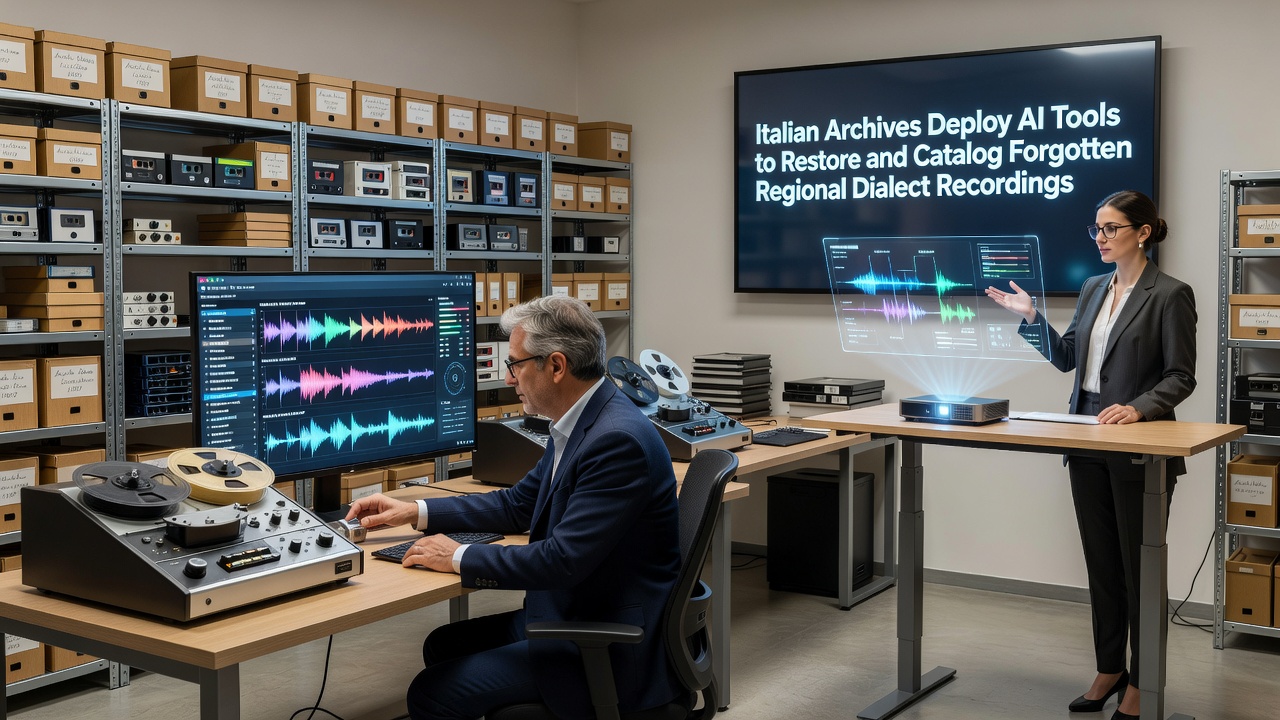
Italian Archives Deploy AI Tools to Restore and Catalog Forgotten Regional Dialect Recordings
Italian cultural institutions have begun rolling out artificial intelligence systems designed to recover and organize audio collections of regional dialects that have sat untouched in storage for decades, and these efforts target recordings captured on reel-to-reel tapes and early digital formats between the 1950s and 1980s. The initiative draws on machine learning models trained specifically on Romance language phonetics, while researchers at multiple archives coordinate their work through shared digital platforms that allow simultaneous access across regions.
Scope of the Dialect Audio Collections
Collections held by the Archivio Nazionale delle Tradizioni Orali in Rome and regional centers in Sicily, Sardinia, and the Veneto contain thousands of hours of spoken material that document variations of Sicilian, Sardinian, Venetian, and dozens of smaller local speech forms, and these holdings include interviews with farmers, fishermen, and artisans whose vocabularies reflect agricultural practices and maritime traditions no longer in daily use. Data from the Italian Ministry of Culture indicates that roughly 12,000 reels remain unprocessed, while catalog entries for another 8,500 items exist only as handwritten notes that require conversion into searchable metadata.
AI Restoration Techniques in Use
Teams apply noise-reduction algorithms that isolate human speech from background hums produced by aging tape machines, and they layer spectral reconstruction models that regenerate missing frequency bands caused by tape degradation. Separate natural language processing pipelines segment continuous speech into phonetic units, then match those units against reference lexicons compiled from printed dialect dictionaries published in the mid-twentieth century. One project at the University of Bologna has released open-source code that lets other institutions fine-tune the same models on their own holdings without starting from scratch.
September 2026 Rollout Timeline
Archivists plan a coordinated release of the first fully processed batch in September 2026, when participating institutions will publish an online portal that allows public searches by phonetic pattern, geographic origin, and thematic content such as food preparation or seasonal festivals. The portal will integrate with Europeana, the European digital cultural heritage aggregator, so that researchers outside Italy can query the material without separate logins. Previews shown at a June 2025 workshop in Florence demonstrated search results that return both the restored audio and aligned text transcriptions in the original dialect alongside Italian translations.
Regional Case Examples
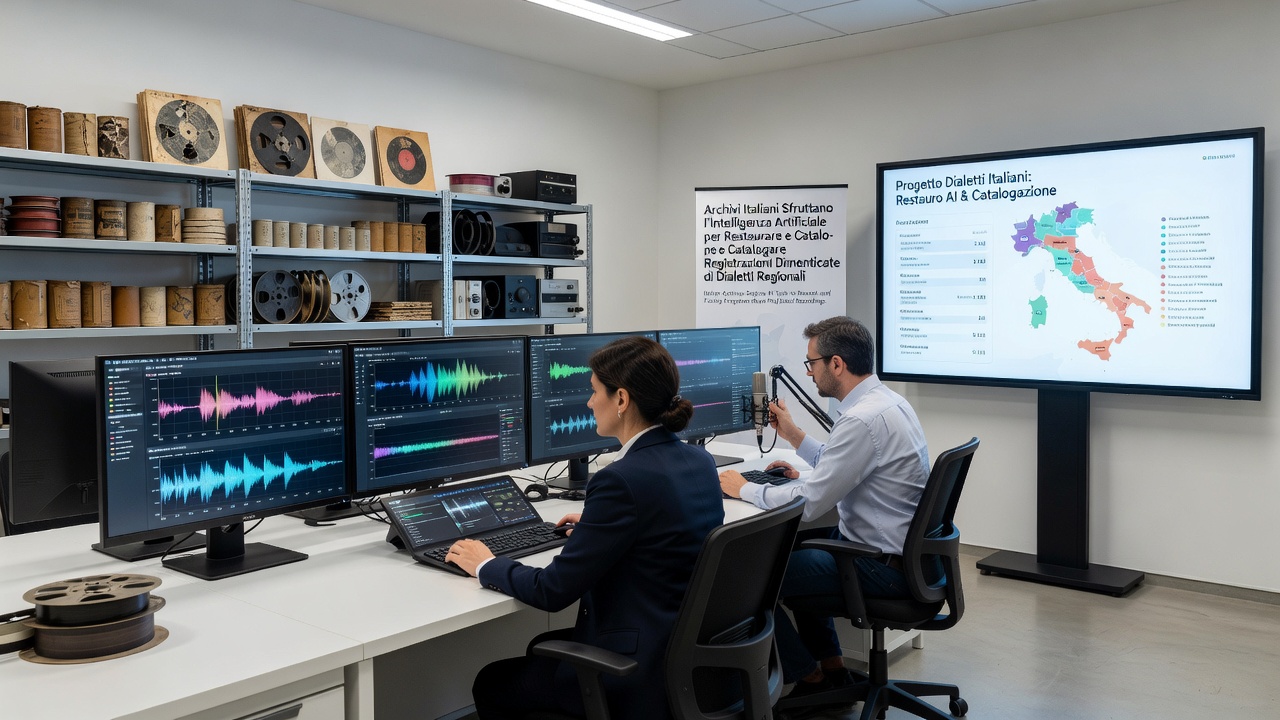
In Sardinia, the Centro di Studi Filologici Sardi has fed 1,200 hours of Campidanese and Logudorese recordings into the system, and the resulting catalog already flags 340 unique terms for traditional cheese-making techniques that appear in no printed dictionary. Archivists in the Piedmont region report similar progress with Occitan-influenced varieties spoken in alpine valleys, where the AI identified speaker turns in group conversations that human listeners had previously found difficult to separate. Observers note that these identifications rely on training data drawn from both historical texts and contemporary fieldwork conducted by university linguists in 2023 and 2024.
Metadata Standards and Interoperability
Project leads have adopted the Europeana Data Model together with extensions developed by the International Phonetic Association, and this combination allows consistent tagging of vowel shifts, consonant lenition, and prosodic features across different recording qualities. A working group that includes representatives from the Biblioteca Nazionale Centrale in Florence and the Australian National University has published draft guidelines for handling code-switching between dialect and standard Italian within single recordings. Those guidelines are expected to influence similar projects in other multilingual European states.
Training and Capacity Building
Workshops held in Milan and Naples during 2025 trained forty archivists and twenty graduate students in the use of the new tools, and participants practiced on sample files that contained both clear speech and heavily degraded segments. The Italian Association of Sound Archives maintains an online forum where technicians share parameter settings that improve performance on particular regional accents. Funding for the training program came through a three-year grant administered by the Ministry of Culture that also covers hardware upgrades at smaller municipal libraries.
Conclusion
The deployment of these AI tools marks a measurable expansion of access to Italy's oral heritage, and the September 2026 portal launch will provide the first large-scale test of whether the restored recordings can support both scholarly research and public education programs. Continued coordination among national archives, universities, and European digital platforms will determine how quickly additional collections move from storage to searchable use.