Vera Bennett · 31 October 2026
Liguria's Beekeepers Adopt Smart Hive Sensors to Track Climate Impacts on Traditional Honey Production Cycles
In Liguria beekeepers have maintained traditional honey production for generations, drawing on chestnut groves, acacia stands and coastal wildflowers that define the region's seasonal cycles, yet shifting temperatures and rainfall patterns have altered bloom times and forced many operators to monitor hives with greater precision.
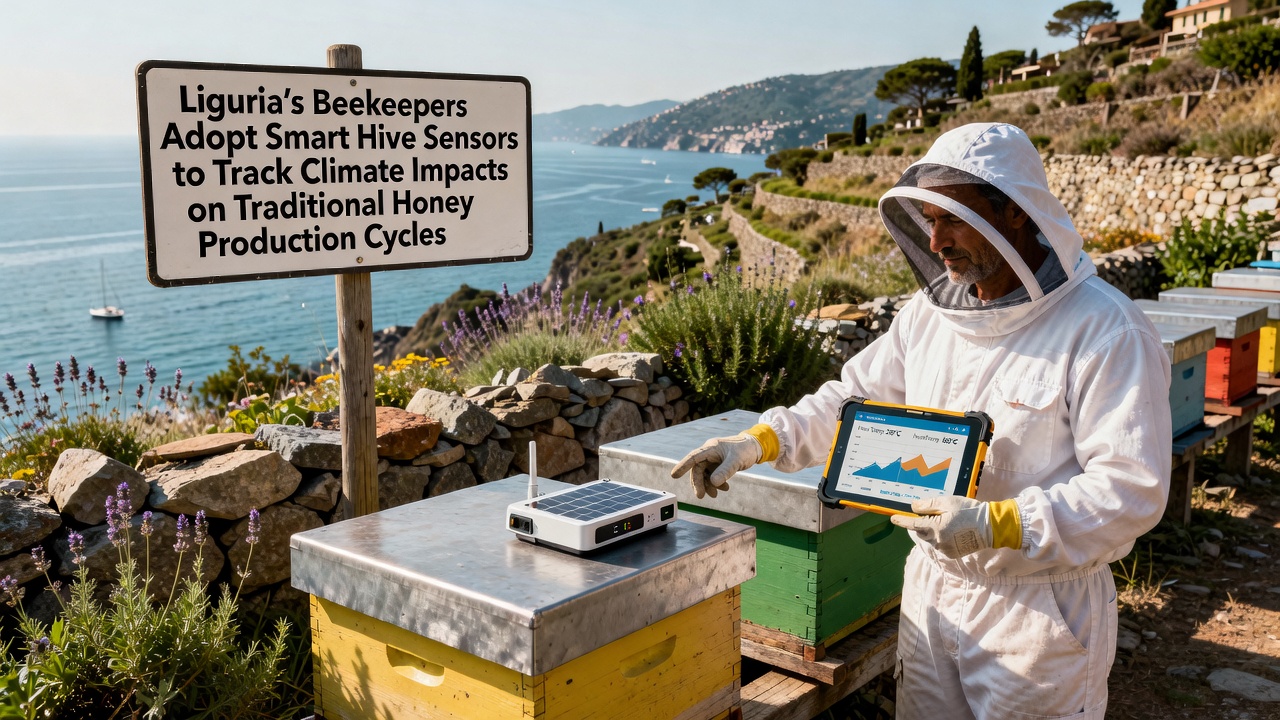
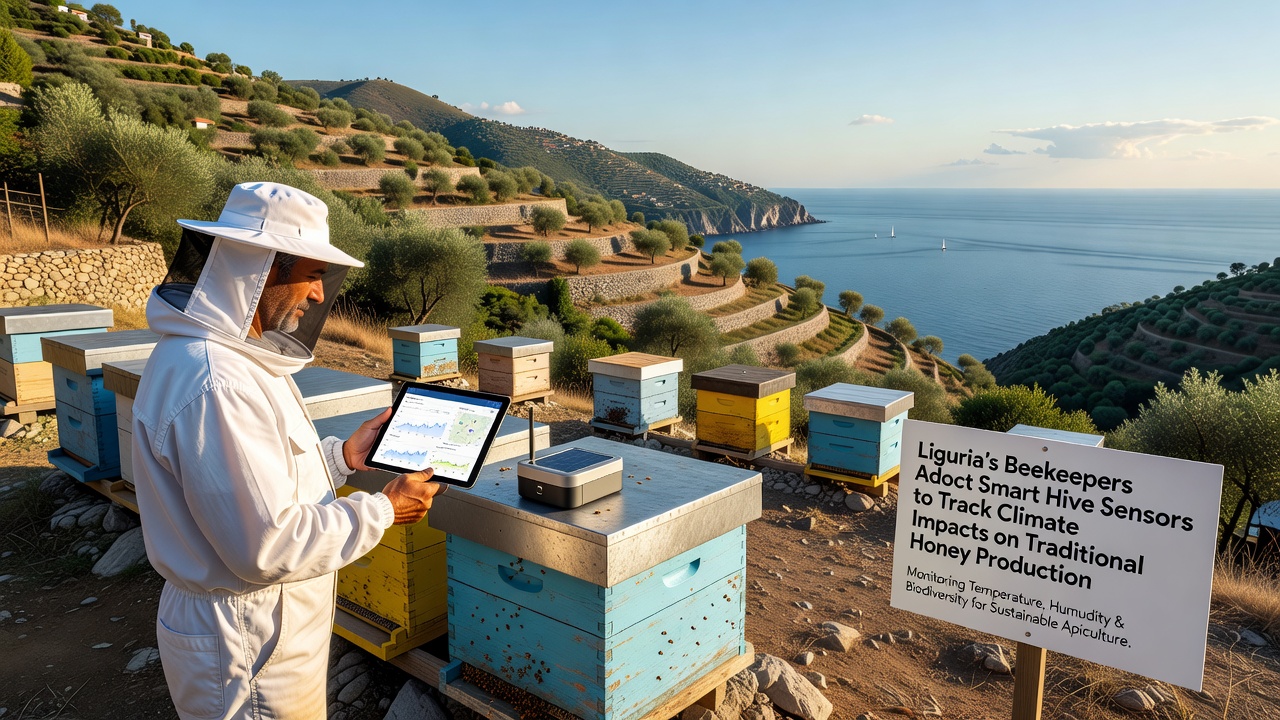
Sensor technology entered the picture when several cooperatives began testing compact devices that record internal temperature, humidity and weight changes every fifteen minutes, transmitting readings to cloud platforms where algorithms flag deviations from historical norms established over the past two decades.
Traditional Cycles Meet New Variables
Local producers once timed hive inspections according to lunar phases and the first appearance of specific blossoms, a practice that aligned with predictable spring flows and summer lulls, but data collected since 2022 shows earlier chestnut flowering by as much as eleven days in some valleys while autumn nectar sources have become less reliable.
Researchers from the University of Genoa documented these shifts through field surveys that compared archival hive logs with current sensor outputs, revealing that colonies now require supplemental feeding in late September more often than in previous decades.
Sensor Deployment and Data Flow
By October 2026 more than 180 hives across the provinces of Imperia and Savona carried wireless sensor arrays that measure brood temperature to within 0.2 degrees Celsius and detect weight fluctuations caused by nectar influx or evaporation, sending alerts to beekeepers' smartphones when thresholds are crossed.
The systems integrate with regional weather stations operated by the Italian National Research Council, allowing operators to correlate hive conditions with microclimate readings and adjust ventilation screens or move colonies to higher elevations during heat spikes.
Observed Impacts on Production
Figures released by the Liguria Beekeepers Association indicate that honey yields from monitored sites averaged 18 kilograms per hive in 2025, down from a ten-year mean of 24 kilograms, while the proportion of multifloral honey increased because shorter bloom windows overlapped more frequently.
One cooperative near Finale Ligure recorded a 30 percent rise in emergency interventions after sensors flagged brood chilling during unseasonal cold snaps in early May, prompting beekeepers to wrap hives with insulating blankets that previously had been unnecessary until late autumn.
Similar monitoring programs have appeared in other Mediterranean regions, and data shared through the European Environment Agency shows parallel trends in southern France and northern Spain where sensor-equipped hives also experienced compressed nectar flows.
Integration With Existing Practices
Beekeepers continue to conduct hands-on inspections every ten days during peak season, using sensor graphs to decide which colonies need immediate attention rather than relying on uniform schedules, a hybrid approach that preserves tactile knowledge while reducing unnecessary disturbance to stressed colonies.
Training sessions organized by provincial agricultural offices teach participants how to interpret humidity spikes that often precede Varroa mite outbreaks, allowing targeted treatments instead of calendar-based applications that once dominated management calendars.
Broader Regional Patterns
Across Italy comparable initiatives have emerged in the Dolomites and on Sardinian highlands, where satellite-linked scales track transhumance routes and alert shepherds when pasture quality declines, yet Liguria's coastal microclimates present distinct challenges because sea breezes moderate daytime heat while trapping moisture that promotes fungal growth inside hives.
Comparative studies coordinated by the USDA Agricultural Research Service have examined sensor datasets from Liguria alongside those from California apiaries, noting that both regions experience accelerated spring development followed by summer dearth periods of increasing length.
Conclusion
The combination of sensor networks and traditional observation has produced datasets that regional authorities now use to forecast honey availability and to guide support programs for small-scale producers facing rising input costs, while the same information helps ecologists model how pollinator-dependent plant communities may shift under continued warming. Continued expansion of these monitoring systems across Liguria's varied terrain will likely generate additional insights into the interplay between climate variables and honey production cycles that have sustained the area for centuries.