Zara Butler · 19 September 2026
Trentino Vineyards Experiment with Traditional Rootstock Grafting for High-Altitude Grape Resilience
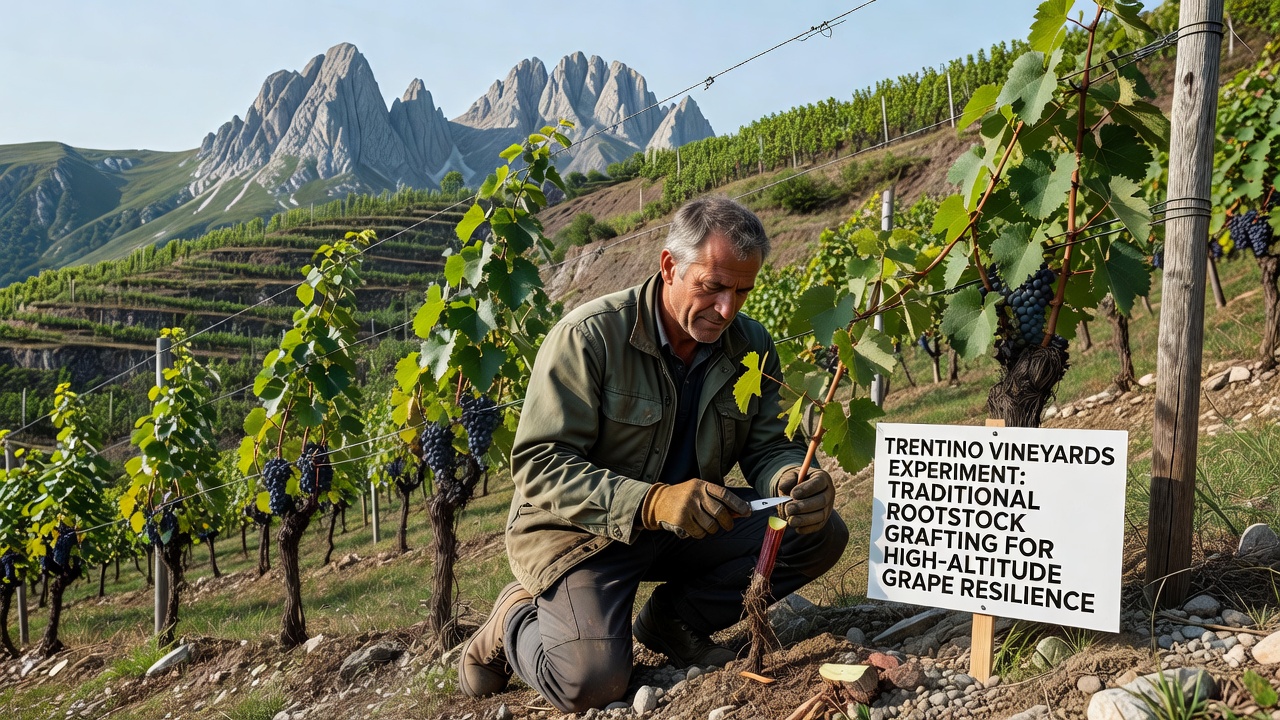
Trentino's mountainous vineyards have long relied on specific grape varieties suited to cool nights and steep slopes, yet shifting climate patterns have prompted researchers to revisit older techniques for plant resilience, and one project now focuses on traditional rootstock grafting methods adapted for elevations above 600 meters. The effort combines historic Italian practices with modern monitoring to test how certain rootstocks influence vine survival during frost events, drought spells, and soil-borne pressures common in alpine zones.
Context of High-Altitude Viticulture in Trentino
Trentino's winegrowing districts stretch across valleys formed by the Adige River, where vineyards occupy terraces and hillsides reaching 800 meters or more in places such as the Val di Cembra and the hills around Trento, and these sites produce crisp whites from Chardonnay along with structured reds from Teroldego and Marzemino. Data from regional agricultural agencies show average annual temperatures rising by nearly 1.2 degrees Celsius since the late 1980s, which shortens dormancy periods and increases the risk of spring frost damage after bud break. Observers note that older plantings established on their own roots sometimes struggle with phylloxera pressure and nutrient uptake in shallow, rocky soils, whereas grafted combinations have demonstrated better anchorage and water efficiency in similar limestone-derived substrates.
The Rootstock Grafting Initiative
Local viticulture institutes launched the grafting trials in 2022 across three experimental plots near Faedo and Cembra, selecting rootstocks descended from traditional European and American hybrids including 110 Richter, 420A, and Kober 5BB, and each was matched with scion wood from local clones of Pinot Grigio and Nosiola. Grafting crews used the whip-and-tongue method during late winter dormancy, then sealed unions with paraffin to reduce desiccation, while field crews recorded callus formation rates and subsequent shoot growth through the first two seasons. Researchers at the Fondazione Edmund Mach tracked variables such as root biomass distribution, stomatal conductance under midday heat, and recovery after simulated frost chambers set to minus 3 degrees Celsius for four hours.
Results collected through 2025 indicated that vines on 110 Richter maintained higher leaf water potential during July dry spells compared with own-rooted controls, whereas those on 420A showed earlier bud break yet suffered less winter cane dieback in plots exposed to minus 15 degrees Celsius lows. Soil moisture sensors buried at 40-centimeter depth revealed that grafted blocks retained usable water longer after rainfall events, a factor attributed to deeper root penetration into fractured bedrock layers.
Monitoring Techniques and Data Collection
Teams equipped selected rows with sap-flow sensors and dendrometers that log hourly diameter changes, while drone flights captured multispectral imagery every two weeks to map canopy vigor across slope aspects, and these datasets feed into models predicting yield under continued warming scenarios projected for 2030 and beyond. In September 2026 the project team plans to release a full report at the annual Trentino Winegrowers Technical Symposium, where participants will review three-year survival rates and fruit chemistry profiles from the grafted plots versus adjacent ungrafted reference blocks.
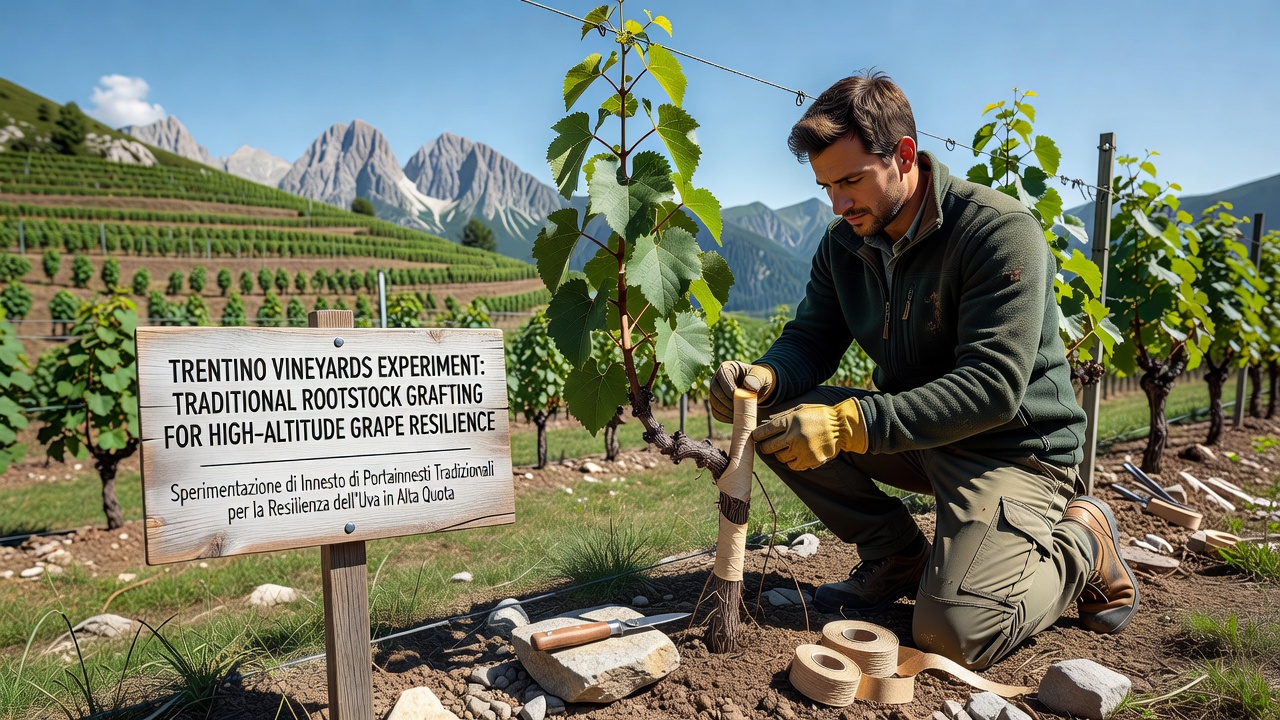
Additional measurements include leaf nutrient assays performed at veraison and berry sampling for titratable acidity and phenolic content at harvest, and preliminary figures reveal that grapes from certain grafted combinations retain acidity levels closer to historical averages recorded in the 1990s despite warmer ripening periods. Workers also document pest incidence, noting reduced incidence of root mealybug on grafted plants in two of the three sites, though confirmation requires further seasons of observation.
Integration with Regional Practices
Trentino growers already maintain detailed vineyard registries and participate in integrated pest management programs coordinated through the provincial agricultural office, and the grafting trials fit within those frameworks by avoiding new chemical inputs while emphasizing plant material selection. Some producers have begun small-scale commercial plantings using the same rootstock-scion pairings, and harvest data from those blocks will contribute to the 2026 dataset. The approach echoes earlier European efforts documented in reports from the International Organisation of Vine and Wine, where similar rootstock evaluations helped stabilize production in steep, cool-climate districts across multiple member countries.
Broader Research Connections
Parallel studies conducted by the USDA Agricultural Research Service on high-elevation sites in California and Washington have examined comparable rootstock responses to temperature swings, and Trentino researchers exchanged protocols during a 2024 workshop that compared measurement standards for frost hardiness and water-use efficiency. Such exchanges help standardize terminology and allow cross-regional calibration of sensor outputs without requiring identical grape varieties.
Conclusion
The Trentino grafting project supplies measurable data on how traditional rootstock choices affect vine performance under current high-altitude conditions, and continued monitoring through 2026 will clarify whether these combinations support consistent yields and quality metrics as seasonal patterns evolve. Regional authorities and grower cooperatives will use the compiled records to guide future nursery orders and planting guidelines, ensuring that new vineyards incorporate material shown to perform under local soil and climate constraints.